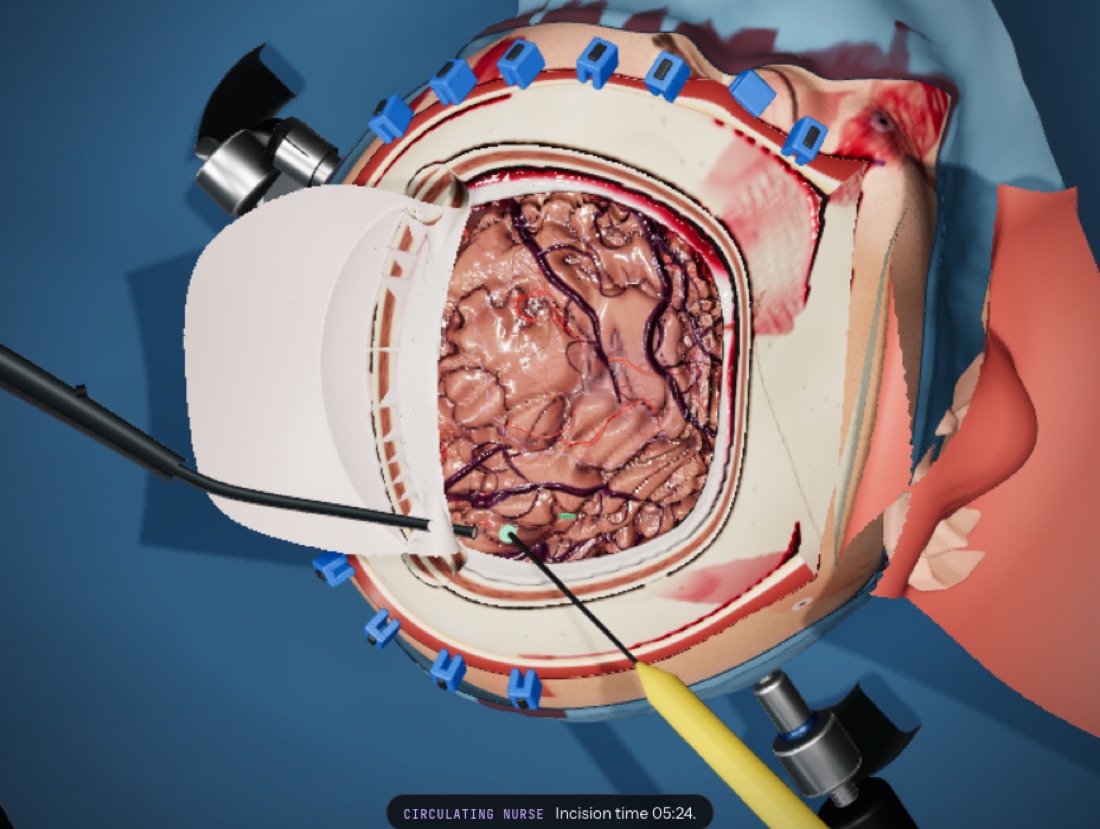
Operating room
Glioblastoma near the motor strip
Navigation, motor mapping and 5-ALA fluorescence. How much is safe to remove?
Simulation-based medical training
Synapse puts students, residents and nurses inside the operating room, the neuro ICU and the stroke code — with a patient whose anatomy and physiology respond to every decision they make. All before the first real patient.
SCORMDelivered as a SCORM course that runs inside HealthStream, so your nurses use the login they already have.
Runs in a web browser. No headset, lab or install. Free pilot through spring 2027 for selected hospitals and schools.

A sample decision
A decision from the neuro ICU case. In every Synapse case the learner decides, the patient responds, and the debrief explains why.
Marcus, the night after his subdural hematoma was evacuated. His ICP has crept up to 27, he's bucking the ventilator, and the nurse clamped his drain for a reading. What do you do first?
Inside a case
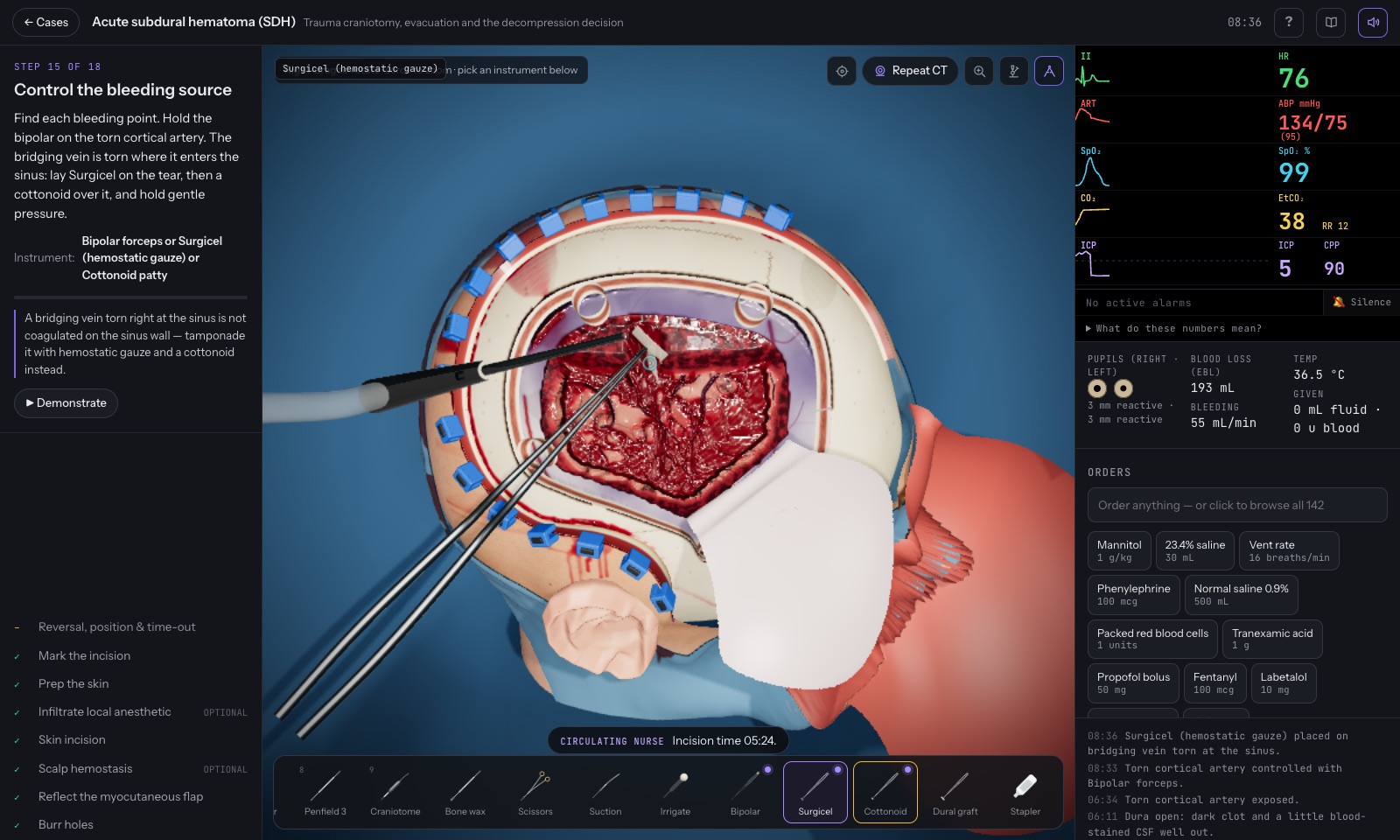
Scalp, bone, dura and brain are separate tissues. Each one is cut, drilled, opened and closed in the right order, with the right instrument from a tray of 40+.
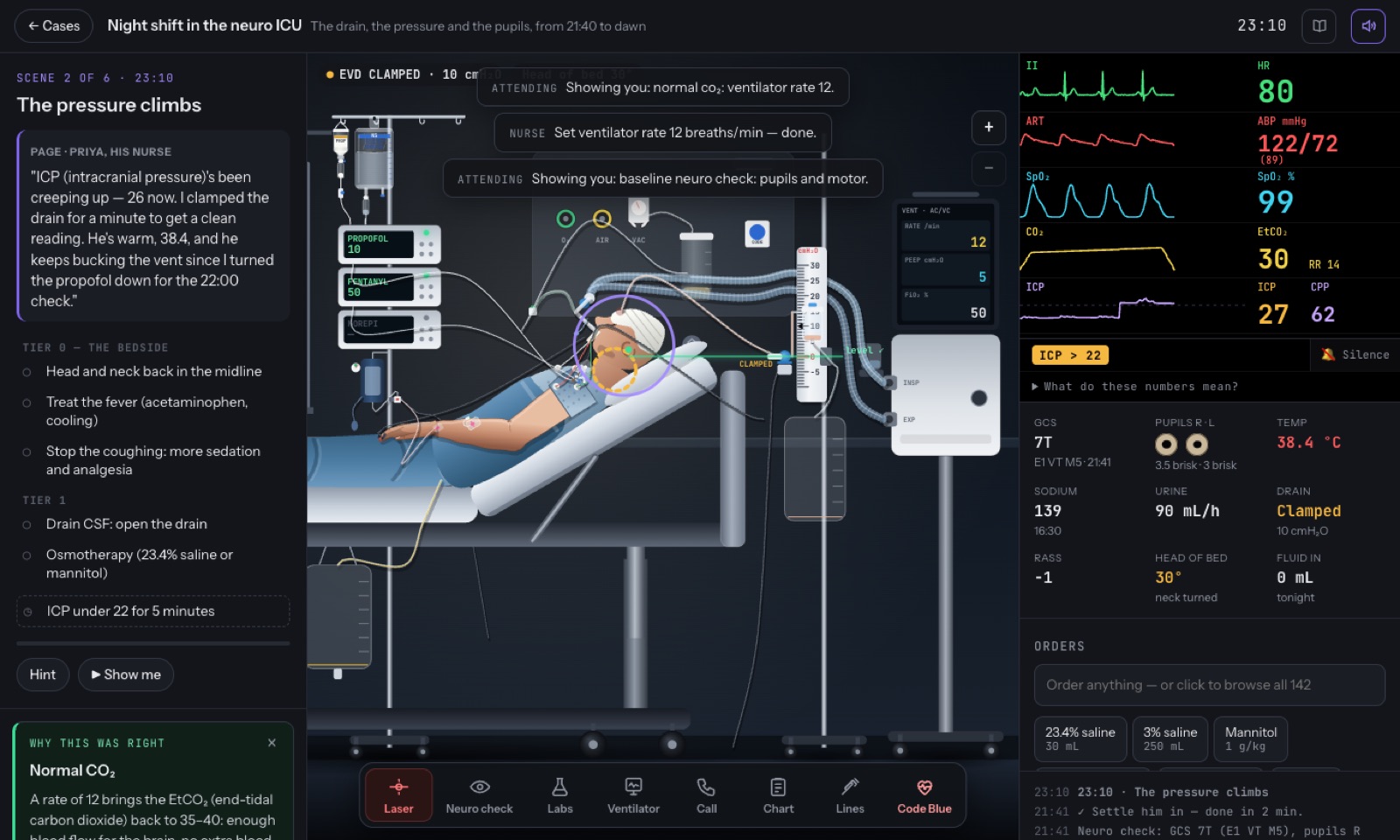
A full night in the neuro ICU, 21:40 to dawn. Pages from the nurse, a drain to manage, pupils to check, labs, a CT trip and an SBAR call to the attending.
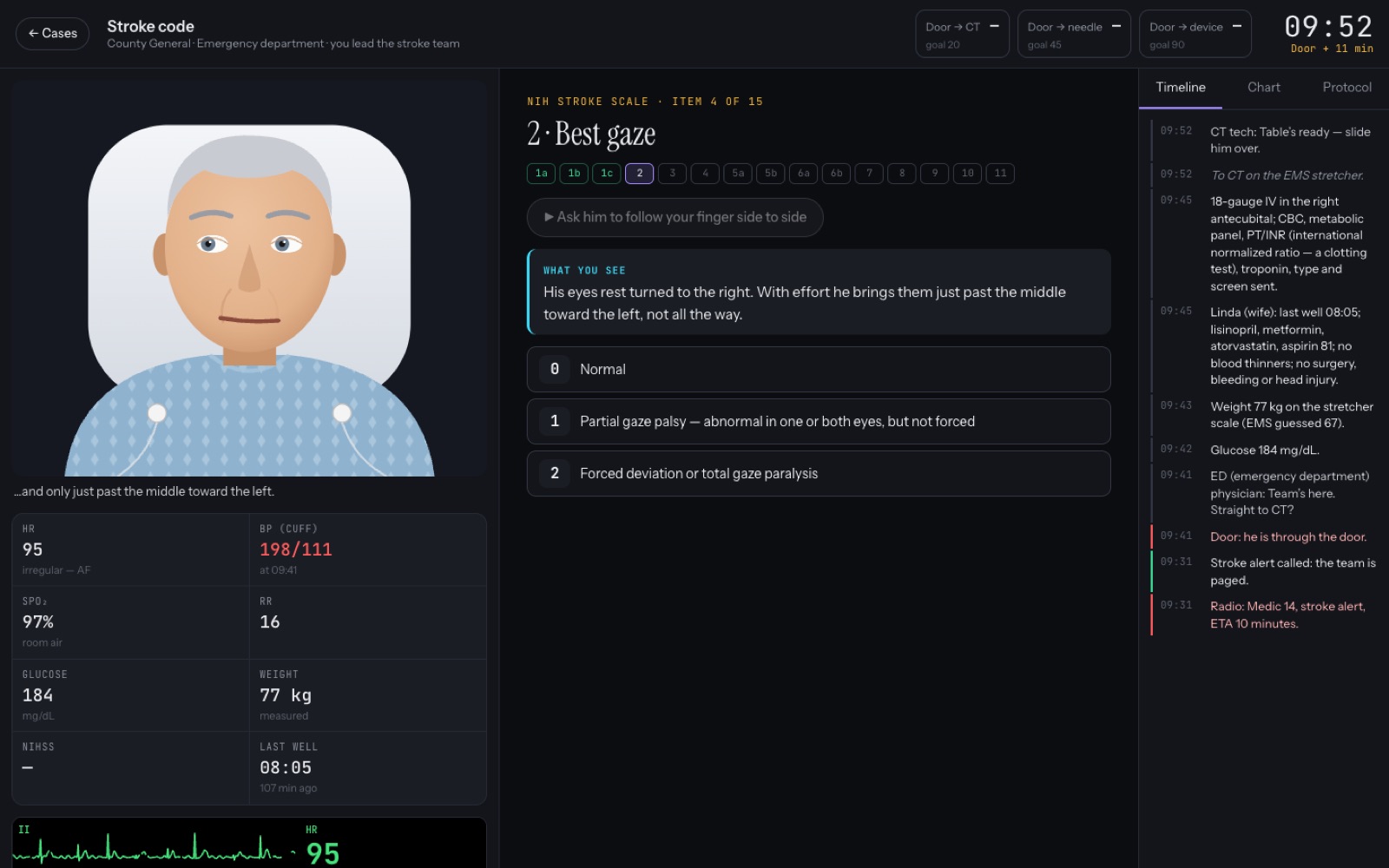
Every choice costs minutes, just as it does from door to needle. Nurses perform the full 15-item NIH Stroke Scale, get the patient through CT and act on the read, check for blood thinners and verify the thrombolytic dose.
Learning that sticks
Videos and slides tell learners what to do. Synapse has them do it, then shows exactly what their choices did to the patient.
Learners make every decision: instruments, orders, doses and timing.
The patient responds right away on the monitor, the field and the scans.
The debrief scores the case out of 100 and explains each mistake in terms of real patient harm.
Fresh patient numbers every run, so nobody memorizes answers. Progress and common mistakes are tracked.
The case library
Navigation, motor mapping and 5-ALA fluorescence. How much is safe to remove?
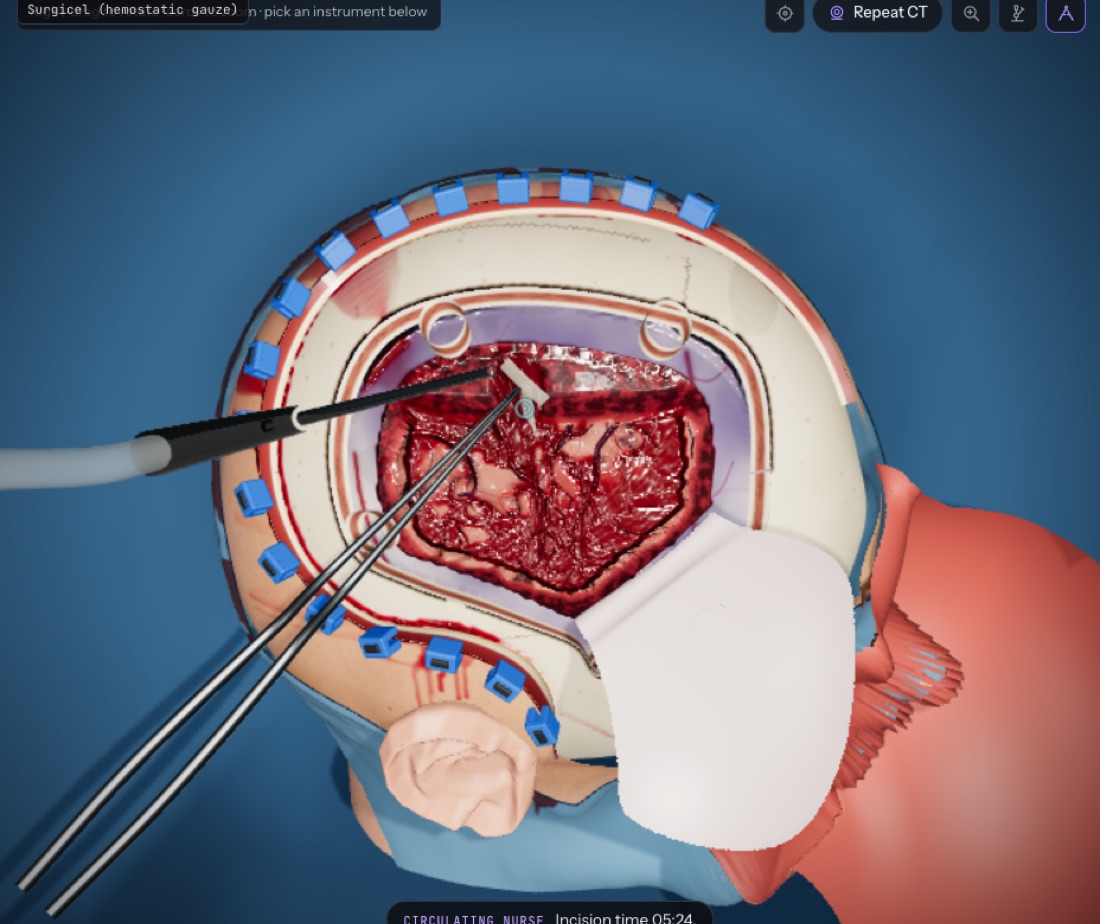
Trauma craniotomy, the bleeding source and the bone-off decision.
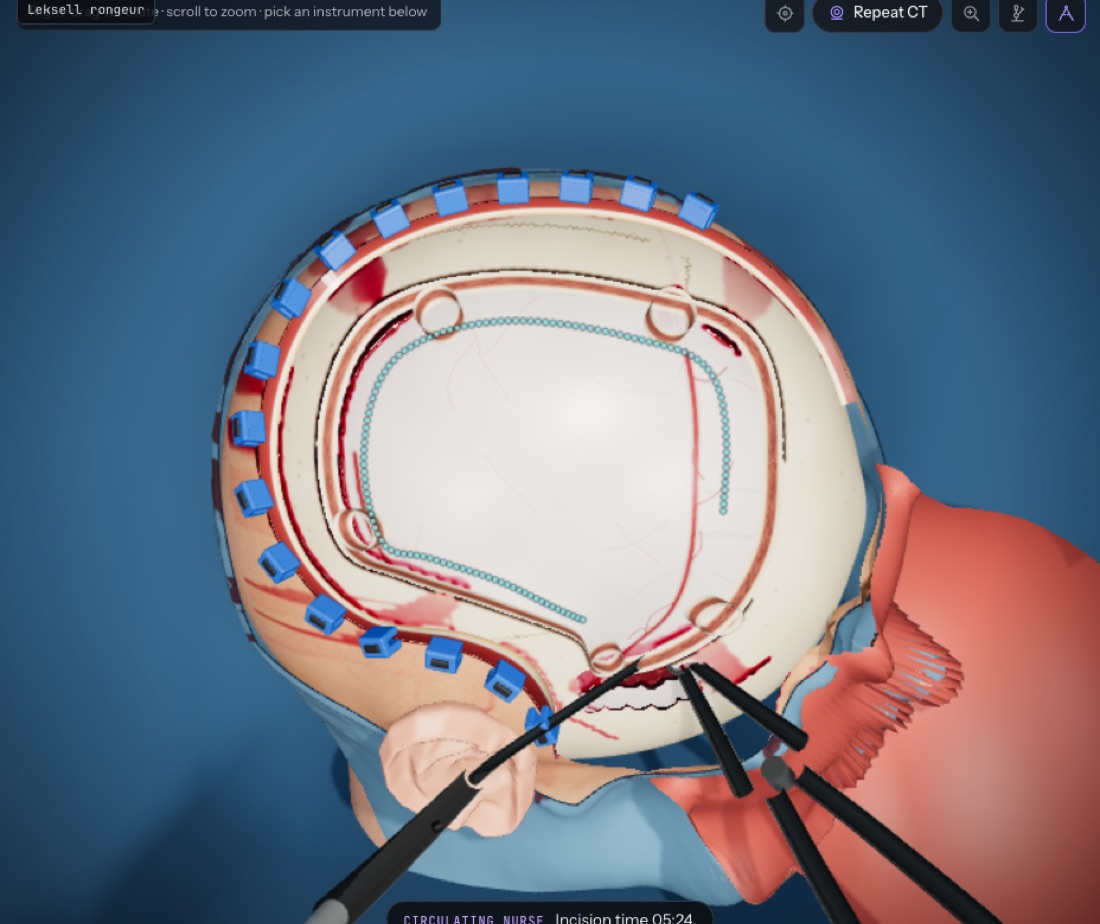
Decompressive hemicraniectomy with expansile duraplasty.
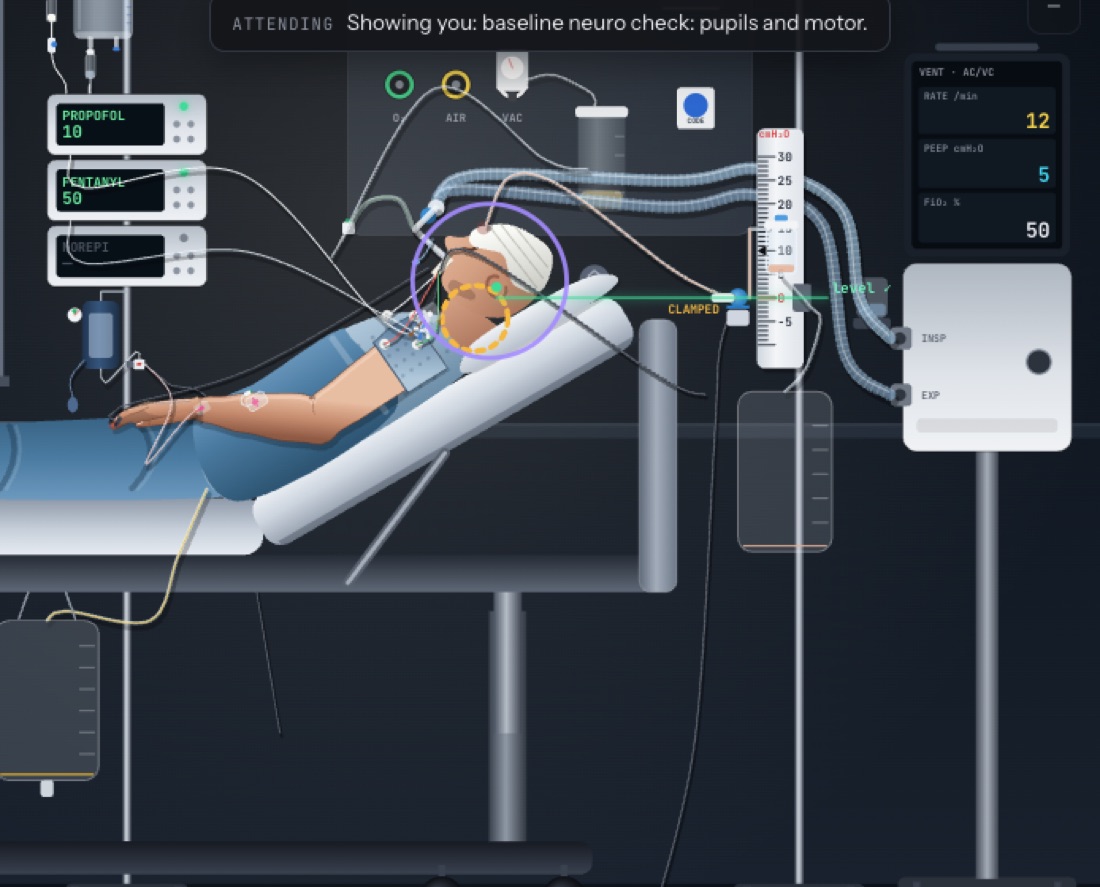
The drain, the pressure and the pupils, from 21:40 to dawn.
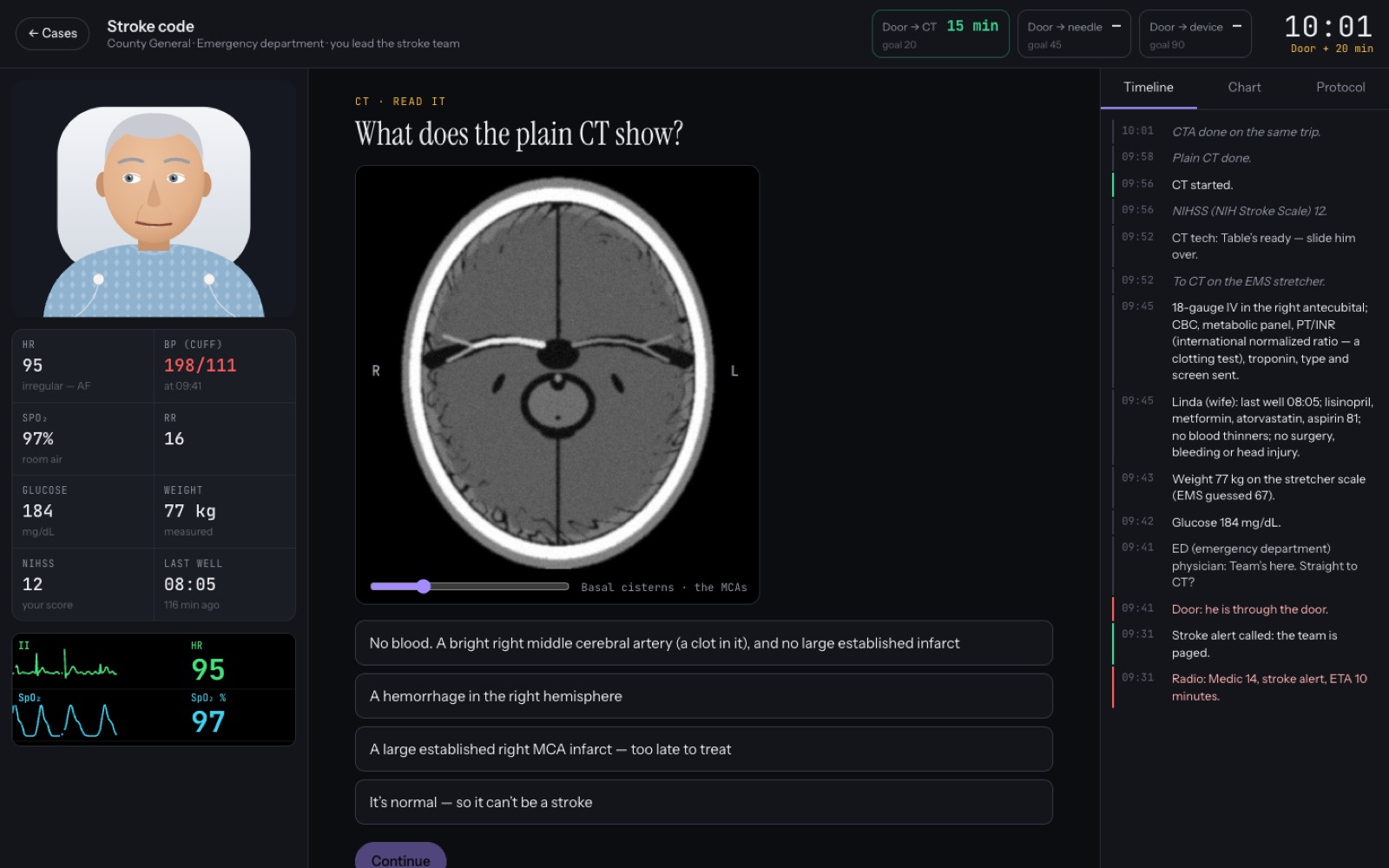
NIH Stroke Scale, imaging and thrombolysis against the clock.
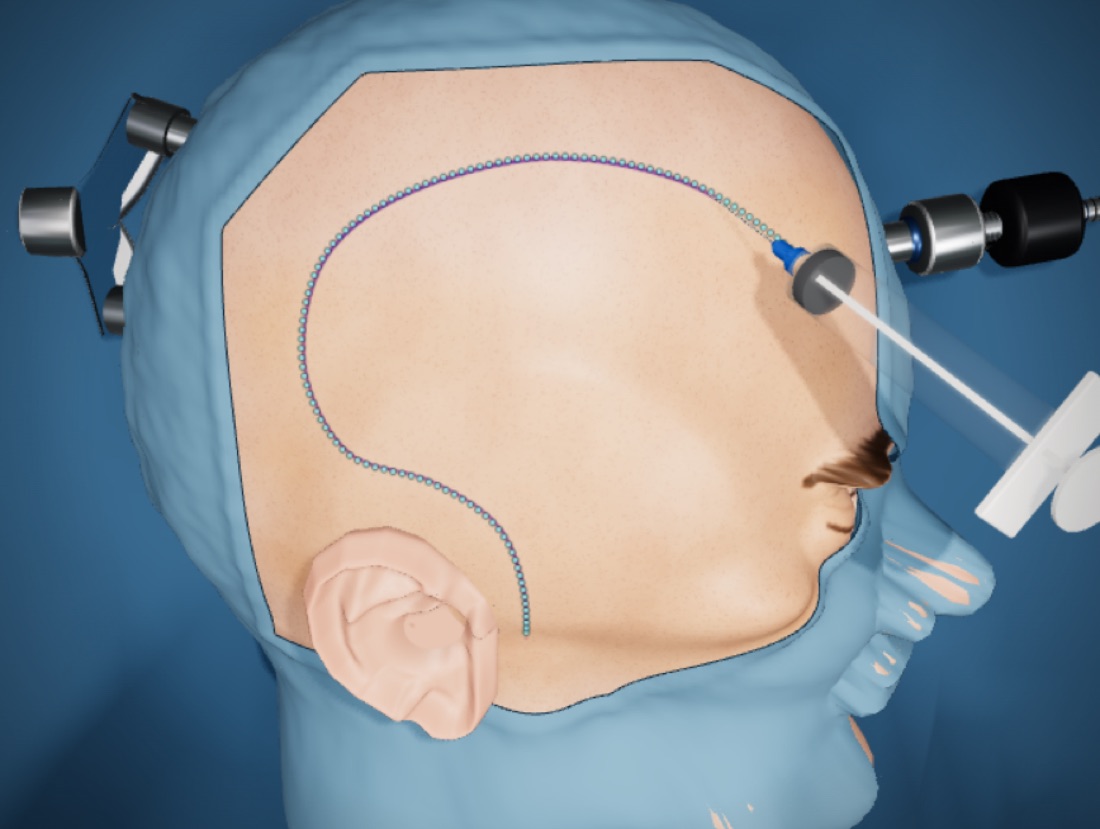
Emergency temporal craniotomy, from the first mark to the last staple.
For hospitals
For schools
For hospitals · SCORM
Hospitals buy Synapse as a SCORM course for HealthStream. Your education team adds it like any other course, and your nurses take it with the HealthStream login they already use.
Your licensed SCORM 1.2 package: the whole stroke program, or one case at a time.
Add it to HealthStream as a course. It takes a few minutes, and we walk your team through it.
Assign it to a unit or a class. Nurses open it in HealthStream, with no separate account to make.
Completion, score, pass or fail and time spent go to each nurse's HealthStream transcript.
Not on HealthStream? The same package works in any learning system that accepts SCORM 1.2.
Why Synapse
Pricing
Per studentBilled yearly
A written quote for your program, built around your class sizes and term.
Get a school quotePer employeeBilled yearly
A written quote for your units, built around your staff and your learning system.
Get a hospital quoteSelected hospitals and schools join at no cost. We set you up, walk your team through a live demo and track results with you.
Apply for the pilotAbout Synapse
Our vision
To transform the way health professionals learn.
Our mission
To make learning engaging, interactive, and practical for real-world healthcare.
Learners do the work themselves instead of watching someone else do it.
Real protocols, real instruments and the decisions nurses and doctors actually face.
Habits that carry over to the bedside, where they protect real patients.
Runs in a web browser, anytime, with no lab, headset or equipment needed.
Why the name Synapse?
Synapse represents the connection between learning and application. When we hear "synapse," we think of three words: connection, learning, application.
Our team
Clinical, technical and marketing leadership working toward one goal: training that carries over to real patients.
 01
CEO
Chief Technology Officer
 02
Co-CEO
Chief Clinical Officer
 03
Co-CEO
Chief Marketing Officer
Talk to us
Book a live 30-minute walkthrough, or tell us how many learners you have and we'll send a written quote.